Friday, December 7, 2012

THE FEAST OF IMMACULATE CONCEPTION – DECEMBER 8TH – SATURDAY (Lk 1: 26-38)


Ineffabilis Deus - The Immaculate Conception - Apostolic Constitution issued by Pope Pius IX on 8 December 1854

"We declare, pronounce, and define that the doctrine which holds that the most Blessed Virgin Mary, in the first instance of her conception, by a singular grace and privilege granted by Almighty God, in view of the merits of Jesus Christ, the Savior of the human race, was preserved free from all stain of original sin, is a doctrine revealed by God and therefore to be believed firmly and constantly by all the faithful."

1. The first reference to Mary in Luke occurs when the angel Gabriel is sent to Nazareth ‘to a virgin betrothed to a man of the house of David, whose name was Joseph; and the virgin name was Mary’ (1: 26-27). Gabriel’s annunciation is concerned with the future greatness of Jesus, and its primary emphasis is Christological. We should not forget this Christology even though there has been more Marian reflection based on this scene than on any other in the NT.

2. All are aware with how much diligence this doctrine of the Immaculate Conception of the Mother of God has been handed down, proposed and defended by the most outstanding religious orders, by the more celebrated theological academies, and by very eminent doctors in the sciences of theology. All know, likewise, how eager the bishops have been to profess openly and publicly, even in ecclesiastical assemblies, that Mary, the most holy Mother of God, by virtue of the foreseen merits of Christ, our Lord and Redeemer, was never subject to original sin, but was completely preserved from the original taint, and hence she was redeemed in a manner more sublime.

3. To the Fathers of the Church, Mary is an almost infinite treasury, an inexhaustible abyss of these gifts, to such an extent that she was never subject to the curse and was, together with her Son, the only partaker of perpetual benediction. Hence she was worthy to hear Elizabeth, inspired by the Holy Spirit, exclaim: "Blessed are you among women, and blessed is the fruit of your womb."

4. Many Popes approved confraternities, congregations and religious communities founded in honor of the Immaculate Conception, monasteries, hospitals, altars, or churches; they praised persons who vowed to uphold with all their ability the doctrine of the Immaculate Conception of the Mother of God. Besides, it afforded the greatest joy to our predecessors to ordain that the Feast of the Conception should be celebrated in every church with the very same honor as the Feast of the Nativity; that it should be celebrated with an octave by the whole Church; that it should be reverently and generally observed as a holy day of obligation.

5. Christian holiness is embodied in Mary and must be realized in the Church. It is God’s transforming presence which must become fruitful in life and work. The scanty biblical data would not be sufficient as a basis for systematic ethics and spirituality but Mary is transparent, filled with the mystery of God. When people pray before her image they enter into God’s presence.

The feast of Immaculate Conception is one of the greatest solemnities in the Church. Mary’s holiness is the hope and model for all of us. Let us surrender totally to our Mother by seeking protection under her powerful mantle. Let us ask our Blessed mother to intercede for us to keep ourselves pure and holy.

Courtesy


INEFFABILIS DEUS (The Immaculate Conception) Pope Pius IX - Apostolic Constitution issued on December 8, 1854.

Mary in the New Testament – Raymond Brown

Mary Mother of the Savior – J. Neuner, SJ

Saturday, October 22, 2011

Sunday, October 23, 2011 Thirtieth Sunday in Ordinary Time - Matthew 22: 34 - 40


Do you know which is the greatest love story ever written? Or the greatest love episode ever took place? Is it Romeo Juliet or Laila - Majnu, Ambikavathi - Amaravathi or Shajahan – Mumtaz? Yes these are truly great stories of love but the greatest love story ever happened in the human history is the love story of a person called Jesus Christ who loved the humanity to the extent of sacrificing his life on the cross.

The motif that runs throughout the chapter 15 of St. John’s gospel is love. There is no doubt that Christ loved us but can we love Christ? How can we love Christ? Is it possible to love Christ? If we say yes, what is the concept of Christ you and me have? Is he like our beloved whom we meet every day or talk to every day. I am not reducing love of Christ purely to human level but that can serve as the spring board for us to take off in to his divinity.

 “I miss you” is one of the oft repeated phrases we say to our best friends What does that mean? It only means that we felt the absence of his/her presence. How many of us can say ‘I miss you Jesus’.  People who are in love find it hard to think of a world without the other. They need to hear the voice of the beloved always; they want to be in his/her presence throughout their lives. Do we have such longing for Christ?

I confided to one of my spiritual directors saying that I find it hard to love Christ because I have not seen him. All that I know is from the Scripture and the Catechism classes. How can I love a person whom I have not even seen? How can I miss someone whom I hardly know personally? How can be rooted in his love when no love relationship has taken between both of us? He answered me saying that the love of Christ is manifested through several other people and sometimes even directly by Himself. I have heard this answer several times from several people but this time I gave a serious thought to it. We hardly open our eyes to the reality. Every day Jesus tells you and me “I love you” But we hardly have time to hear it.

What is the problem of world today? It is not so much the Globalization, terrorism, violence, Caste system etc. These are only the symptoms of a serious problem or a killer disease. The virus that causes this disease is the culture of ‘Lack of Love’ If we love someone sincerely we will not exploit them, we tend to be gentle and caring with them, we will not discriminate our beloved. We live in a world which is promoting anti-love culture. Slowly we are becoming narcissistic in our approach. This is only reflected in our day today life.
I am just talking about the human love and transposing it to Jesus. But we should not stop only there. The quality of the love of God is not as ours. He loves us continuously even if we sin against him. His love is filled with grace; he keeps telling us “I love you with all your defects”

God created us not because he had nothing to do. He created us because He loves us. Every love creates love. His love created us but we as usual betrayed his love and fallen away. It surely hurt God but he still keeps loving us. He went on to make the greatest covenant in the human history in Mount Sinai. We broke the covenant and kept hurting him. When we had gone too far from his love, God understood the danger and he wanted to save us and so he sent the prophets. What did we do? We killed the prophets and insulted God. God did not stop with that, He did not get frustrated with our attitude. As we read in Jn 3: 14, He so loved the world that he sent his only son to save us. His incarnation was the decisive manifestation of God’s love. Did we respond to him? No! We kept rejecting his love. We went to the height of insensitivity by crucifying our savior on the other hand God went on to show his love on the cross. There is no doubt he saved us! But what is our response? We as cruel sons and daughters keep rejecting God’s love. One can even ask what is the need for this God of love, to love us. It is not his need to love us,  he loves us simply because he loves us.  Such is our God of love. Very few of us respond to his love. Every time we commit sin, we reject his love. Every time we fail to see God in the poor, orphans, widows and the marginalized we fail to accept this God of love. We have lost that childlike innocence.

Is it possible to be rooted in his love? It is possible to be nested in his love. It is wonderful to be with God. But God’s love is not passive it is active love. God’s love brings in transformation. If we sincerely love God it will be manifested in our love towards our neighbour.

The moment we develop hatred, favoritism, insensitivity we move away from God. He is father who is stretching his arms to embrace us the prodigal sons and daughters. He is ready to accept and love us as we are but we have to take the first step to return. Once we return to him, a huge banquet is waiting for us. But that does not stop with that, we have to start living a responsible life. We cannot continue living a life of prodigal sons and daughters.

The Evangelist John repeatedly speaks about love of Christ. Christ calls us to abide with him in his love. He is calling us to be branches in his vine. He is not asking us to enjoy the grapes rather he is asking us to be part of the plant. The fruits of the vine and the branches are for the humanity at large. As ministers of word of God we are called to be rooted in Christ and together with him bring fruits of salvation to the humanity at large.

Karl Rahner speaks about Radical the unity of love of God and love of neighbour. It is true that we cannot equate these two. If we say that love of neighbour is equal to love of God we are actually committing the greatest sin of idolatry. At the same time we need to realize that love of God without love of neighbour would be and incomplete. It is incomplete because the love of God is expressed through love of neighbour. There are persons who would love to spend a good deal of time in prayer but cannot spend a little time with the needy. This would be an incomplete love of God. On the other hand there are some who think that only by loving neighbours we can reach God which is equal to idolatry. Our love for our neighbour should eventually lead us to God in faith. Christ spent his day in ministry and most part of the night in prayer. Mission and prayer are inseparable components; one without the other would be missing the other half of the reality.

Today’s world needs love both of God and neighbour. Love of God is always there but many are blind to this supreme love. We need to make them realize that God loves them with all their sinfulness. This love of God should be concretely manifested in our love for the world at large. On the judgment day when Christ asks us whether we gave food to him, whether we clothed him, whether we visited when he was sick, whether we welcomed him, we should not be asking a foolish question, Lord when were you in need and when did I neglect you? It is not for the sake of judgment we should love him rather it is our Christian call to love the neighbours. Christ again defines a neighbour through the famous parable Good Samaritan. We should be proud to call ourselves as Christians because it is the only religion where God has lived a life of a human being and showed us the path to live a fruitful life. We are supposed to be enlightened people, we cannot give excuses saying that we were ignorant about God’s expectation from us. Let us be the carriers of love which is possible only when we are nested in Christ’s love which is nested in Father’s love through the Holy Spirit. 

Saturday, October 15, 2011

Sunday, October 16, 2011 - Twenty-Ninth Sunday in Ordinary Time - Matthew 22: 15 – 21


"Render therefore to Caesar the things that are Caesar's, and to God the things that are God's."

In today’s readings we come across two kings with their names starting with letter ‘C’. In the first reading there is a mention about the king Cyrus of Persia and in the gospel we hear about the Roman Emperor Caesar. I am not intending to give a detailed description of these two kings but the necessary information in order to situate us into the context.

The 12 tribes emerging from descendants of Jacob got divided into two kingdoms, namely Northern kingdom and the Southern kingdom after Solomon’s reign. Northern kingdom, which is called as Israel had Samaria as its capital and the southern kingdom, called as Judah had Jerusalem as its capital. In 722 BC the Assyrians marched against the Northern kingdom and destroyed it totally by taking all the inhabitants as captives. We do not have any evidences with regard to their fate. What happened to those people who were taken as captives? Were they liberated? We do not know anything about them. Seeing their fate, the prophets started warning Judah the southern kingdom. The people continued to exhibit their infidelity to Yahweh. In 587 BC the Babylonians did the same thing to Judah, what the Assyrians did to Israel two centuries earlier. They were exiled and held as captives in foreign land. It was in 539 BC, Cyrus of Persia defeated the Babylonians. Cyrus in spite of his reputation as great warrior respected the local cultures, traditions and customs. He allowed the people of Judah, to get back to their land and thus gave them political freedom. It was this Cyrus who is praised as the Anointed one by Isaiah, the only person who was given this title other than Jesus Himself. He was considered as the Messiah for the people of Judah.

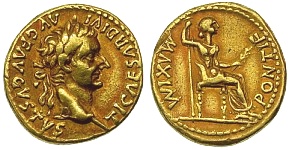
The Persians were later conquered by Alexander the great. After Alexander’s death the Macedonia dynasty was divided into two provinces and later into to four. Years later it was captured by the Romans. Julius Caesar becomes one of the prominent kings of Rome. But it was Augustus Caesar who actually establishes himself as the powerful king and was even considered as God. Augustus’ image was engraved in the coin as he was considered as God. It was Tiberius Caesar who ruled Rome during the public ministry of Jesus.

The Pharisees clubbing with Herodians approach Jesus with the finest trap. If Jesus says, it is obligatory to pay the tax, his own people will turn against him for being disloyal to their nation, and if Jesus says it is not right to pay the taxes, he would be taken to task by the Herodians who were puppets in the hands of Romans. ‘Yes or No’, will be deciding his fate. We always tend to think in terms of ‘Yes or No.’ We do not see that there is always another way to approach the problem. This is called lateral thinking. When we say, 1+1, we always think it is 2. It need not be. 1+1 can be also equal to 1. If you take a drop of water and place it on a plate and then leave another drop of water gently on to the same drop, it will remain as one drop. Our minds always thinks in ‘Either- Or’ fashion but we seldom approach it with ‘Both - And’ model. Jesus beautifully gives an answer and silences his opponents.

This passage is one of the most important passages of the Gospel. We should not forget that the Church grew along with the state. From the time of Constantine there was a happy blend of the Church and the State. When the Emperors got converted, all the subjects also were forced to change their religion. But it did not always have a happy co-existence. There were a lot of problems due to undue intervention of the State into the affairs of the Church.

Jesus actually had given the solution much before. We need not bring dichotomy between the Church and the State. One can be a very good Catholic at the same time be an honest citizen of the State. Loyalty to one’s faith need not necessarily bring friction in one’s citizenship (exceptions do exist).

Let us not forget that God alone is the ruler. We cannot give anything to God because everything we have is from God. But as long as we live in this world, we have our obligations to the State and our country. We need to pay our taxes properly. We need to be honest in our dealings in our work place. A person who receives bribes in the office and donates a good some to the Church will be still dishonest citizen and unfaithful Christian.

Jesus response takes me to think another plane. When we approach our problems with ‘either or ‘fashion, most of the times we end up in frustrations. This generation of ours is extremely fragile. The magazine ‘week’ has an interesting article in the recent issue on the suicides of young IIT students. It is not only with the youth of IIT but also other young people who think that there is no way to approach a problem once they encounter failure in studies, love life, business, relationship etc. Jesus approaches the problem in another angle. Whose words should I listen? My mother or my wife? my friend or my girl friend? My parents wish or my wish? Why can’t we approach it from another angle?

Many years ago in a small Indian village, a farmer had the misfortune of owing a large sum of money to a female village moneylender. The female Moneylender, who was old, fat and ugly, fancied the farmer’s handsome son, Cliff. So she proposed a bargain. She said she would forgo the farmer’s debt if she could marry his son. Both the farmer and his son were horrified by the Proposal. So the cunning female moneylender suggested that they let providence decide the matter. She told them that she would put a black pebble and a white pebble into an empty moneybag. Then the son would have to pick one pebble from the bag.

If he picked the black pebble, he would become her husband and the father’s debt would be forgiven. If he picked the white pebble he need not marry her and the father’s debt would still be forgiven. But if he refused to pick a pebble, his father would be thrown into jail.

They were standing on a pebble-strewn path in the farmer’s field. As they talked, the moneylender bent over to pick up two pebbles. As she picked them up, the sharp-eyed son noticed that she had picked up two black pebbles and put them into the bag. She then told the son to close his eyes and pick one pebble from the moneybag. Now, if he reveals the dishonesty of the lady, it would be harmful for his father. He also thought that providence of God will lead him to a better conclusion that can overcome the dilemma.

The son put his hand into the moneybag and drew out a pebble. Without looking at it, he fumbled and let it fall onto the pebble-strewn path where it immediately became lost among all the other pebbles. ‘Oh, how clumsy of me,’ he said. ‘But never mind, if you look into the bag for the one that is left, you will be able to tell which pebble I picked.’ Since the remaining pebble is black, it must be assumed that he had picked the white one. And since the moneylender dared not admit her dishonesty, the son changed what seemed an impossible situation into an extremely advantageous one.

As we ask God for the grace to live as faithful Christians and honest citizens, let us also ask the Lord to give us insight to approach the problems of life as did our Lord Himself.

Thursday, October 6, 2011

OUR LADY OF ROSARY – OCTOBER 7TH – FRIDAY - Lk 1: 26-38


The historical development of the Rosary dates back towards the end of the twelfth century when the first half of the Hail Mary, as known today, began to assume the spiritual significance of the Our Father and the Creed and was seen as a prayer all Catholics should know. At that time the Rosary began to take shape in the form of Our Lady’s Psalter, one hundred and fifty Hail Marys. To these were added the meditations on mysteries in the lives of Mary and Jesus, from the Annunciation to their Glorification

The word Rosary from the word Rosarium meaning a rose garden. In the first half of the fifteenth century, Dominic of Prussia, a Carthusian monk helped make the devotion more popular by linking fifty Hail Marys with fifty phrases. A Rose garden was used to mean this collection of fifty points of mediation and so the name Rosary became the official title of the devotion. Another Carthusian, Henry of Kalkar, divided the fifty Hail Marys into decades, with an Our Father between each.

By the early fifteenth century, the essential elements of the Rosary was established, but it became popular only when it was simplified.  In 1483, Our Dear Lady’s Psalter a book on the Rosary written by a Dominican refers to the same fifteen mysteries as today with one exception: the fourteenth combines Mary’s coronation with Assumption and the fifteenth is the Last Judgment. It was Blessed Alan de la Roche another Dominican promoted the traditional association of St. Dominic with the Rosary.
Pope Paul VI issued Marialis Cultus in 1974, in which he referred to the Rosary as a ‘compendium of the entire Gospel’. We should never forget that Rosary is basically a prayer with Christological orientation.
We all know that in 2002 Blessed John Paul II marked the twenty fourth anniversary of his election by signing the apostolic letter Rosarium Virginis Mariae. In it he suggested the five new ‘mysteries of light’.

Rosary has both soul and body. Body is the fingering of the beads, which is meant to calm one’s emotional state. It is also a method of self- hypnosis, to eliminate ‘worrisome’ thoughts from the mind. It helps one to remember what Christ did for our salvation. The soul is to intellectually feast upon aspect of the faith that surround the mystery and see their relevance to one’s own personal life.

Rosary has a lot of significance. The joyful mysteries are antidotes to the problems of the boredom of the daily and ordinary events of life. Sorrowful mysteries help one to overcome the perception of one’s suffering by looking at Christ. Glorious mysteries are about the final goal of the Christian life namely the beatific vision and its accompanying joy, and the luminous mysteries helps us to reflect on our own mission.

There are different ways of praying Rosary. Each of you might have your own style of praying it. Even Rosary can be used as a prayer for reparation. Annunciation – against heresy, apostasy and other sins against faith; Visitation – against sins of despair or presumptuous thinking that God cannot or will not solve the problems we face; Birth – against the sins of abortion, contraception and other wrongful use of human embryo; Presentation – missing mass on sundays and the days of obligation, negligent with regard to the duty towards one’s parish; Finding of Jesus – against the attitude of complaining against divine providence.
There are still several ways of praying the Rosary meaningfully. It is left to our personal choice.

How nice to meditate on the Lord’s life as seen through the eyes of her who was closest to the Lord?

Friday, September 30, 2011

SUNDAY, OCTOBER 02, 2011 TWENTY-SEVENTH SUNDAY IN ORDINARY TIME - Matthew 21: 33 – 43


When my 2 year old nephew started crying, I gave him my mobile phone with the caller tune on, and he immediately stopped crying. I looked at him with a sense of achievement. He started playing with it for sometime. I was bit scared because the mobile phone was not safe in his hands. He could break it at any time. When the time came for me to move away from the place, I tried getting it back from him. He again started crying. He told me in his broken phrase that the phone was his. It was rather an embarrassing situation. At the end of it, my brother had to pull it away from him which made him cry all the more. This would have been the experience of most of us. We try to make the child happy by giving it whatever we have with us, but the moment the child receives the object it thinks that he/she becomes the owner of the object. In the case of child it is understandable because it is not aware of the situation but in the case of adults it is different story altogether.
The leaseholders knew it very well that they were not the owners of the vineyard. Yet they want to become the owners of the vineyard. They go even to the extent of killing the heir of the owner.
The exegesis of the parable is quite simple. The owner is God the Father, the vineyard is the kingdom of God, the tenants are the people of Israel, the different batches of servants are the prophets, the son is Jesus Christ and the new batch of tenants are the Gentiles. This parable gives the summary of the whole salvation history. God created the whole world and made human beings at the stewards to take care of the created world. The human beings due to their disobedience and with a desire to become like God, sinned against Him and broke the covenant. God did not stop here; He sent the judges, kings and the prophets as His messengers. But the people did not listen to them. They humiliated and even killed God’s messengers. God thus finally sends His only Son to redeem the world. But they did worse things to him and crucified Him.
Lessons for today
God has entrusted us with a lot of gifts and talents that could be used for the enhancement or our life and the life of society at large. We are only the stewards of the gifts not the owners. Our houses, house hold articles, our income, bank account, property, health, relationships and every other thing we possess are the gratuitous gifts of God. Whenever we think that we are the owners and whenever we use the gifts and talents for our selfish motives or purely for self promotion without sharing it with our neighbours we would be committing the same mistake of these wicked tenants.
Our lives are largely guided by pragmatism and utilitarianism. Whatever is practical, feasible or useful are considered as the truth. We tend to make use of the people only for our selfish motives. There are a few who will begin a conversation with others only if they want some favours from the individual concerned and once the work is done they move away from that person as if they had not seen that individual at all. What can we say about this? This is the simple example of Utilitarianism. Whenever we want only the benefits and whenever we exploit people for our ends, we commit the same mistake the wicked tenants committed.
This we see it everywhere. Many children abandon their parents in their old age, forgetting the amount of sacrifices the parents have made in bringing up their children. It can also happen in religious settings. Once the person steps down from the power, people tend to ignore them and act as if they have nothing more to do with that person. This happens almost in all the types of relationships. Are we not trying to act like the wicked tenants through our ingratitude and selfishness?

Friday, September 16, 2011

PARABLE OF WORKERS IN THE VINEYARD – SEPTEMBER 18TH - 25th Sunday - (Mt 20: 1-16)


You know what happened on the second day? After receiving their wages, those who came early on the first day, were still angry with the Landlord. “That was too bad on his part. He tells us that we are envious because he was generous. Was he really generous? If yes, why didn’t he give us more? Anyway we shall go late tomorrow”. They came very late the following day, but they were surprised to see those people who came late on the first day were already at work. They were impressed with the landowner who gave them job opportunity and who was very kind to them. They wanted to pay him back with their hard work. The late comers joined them worked till the close of the day. The landowner told the manager, ‘Call the labourers and give them their pay beginning with the first one and then going to the last.’ When those who came early, he gave them the usual wage and some bonus money appreciating their work.  Then when the late comers came, the owner calculated their duration of work and gave money accordingly which was lesser than the daily wage. When they received it they grumbled against the landowner saying, ‘Yesterday when we worked from early morning, you never gave us any bonus and now, you are giving them the bonus and cut short our money. Again the owner told them, I am not doing anything wrong. You are again envious because I am generous with them. I have paid what you deserve. Am I not allowed to do what I choose with what belongs to me?

This second day is only my imagination, but still it tells us, what Jesus wanted to tell us today. I used to think, why did the landowner treat everyone equally? He should have been bit more generous with those who came early.

During exam days, there are students who prepare their time table bit early and start studying for their exams. We also see others who seem to have good time and just study the previous day. When the results come, the latter may score same marks and sometimes even more marks than the former. It is not the duration that matters but the result. These workers who were idle in the market might have felt hurt. They were regarded useless by the landowners and were not hired for the work. When our protagonist gives them a chance to work, they prove their worth. They would have done the same amount of work as did the others.  The possibility could be, the owner being a far sighted man wanted to attract his workers right at the beginning itself so that these workers may contribute more in the future. Therefore we have no right to question the landowner because he has not done injustice.

But somehow his action seems to be not okay. We feel that something is wrong in his approach. What is that makes us to grumble against the landowner? It is the attitude of comparison. Sadly we are brought up in an atmosphere, where we are either compared with others or we keep comparing ourselves with the other. We are not comfortable with ourselves.

I remember in our earlier seminary days, when there is Bible Quiz or Marian Quiz, there will be some people who study so well and answer. At the end of the quiz, the team that gets first place is awarded with nice prize. Now, all the members of the winning team get the same prize. There will be also a few of us, who get the prize without knowing one single answer. This could easily irritate the ones who study well. ‘We study and answer and these get the benefit of it.’ This argument sounds justifiable. But who are we to question the Lord and His generosity. He can do whatever He wants. He has not done injustice to any. But our attitude of comparison makes us feel bad.

There are several ways of understanding this parable. There are 5 batches of workers coming to work in the field which is compared to the five different stages in the history of salvation namely Adam to Noah, Noah to Abraham, Abraham to Moses, Moses to Christ and Christ to present day. Some are of the opinion that Jesus attacked the Pharisees by comparing them with the workers who came early to work as against the tax collectors and Gentiles who came at the close of the day. But it is more fitting to understand this parable as an occasion for Jesus to teach his disciples to overcome the sin of comparison. The disciples were fighting for the prominent place, there was envy, jealousy among them. God’s standards are different. We do should not teach God lessons on justice.

‘Why do we find it so difficult to rejoice over the good that enters other people’s lives, and why do we spend our time calculating how we have been cheated?’
‘For most of us injustice is what happens to our disadvantage, while what happens to our advantage is good luck’

We can imitate others and we can follow the footsteps of great people, these are the positive ways of learning from others but comparing ourselves with others will not help us in anyway. Let us not make our life miserable by comparing ourselves constantly with others. God is the author of our life and He has every right to do whatever He wants.

St. Paul in his second letter to the Corinthians (10: 12) beautifully summarizes this message by saying "But when they measure themselves by one another, and compare themselves with one another, they do not show good sense."

Thursday, September 15, 2011

JESUS’ ATTITUDE TOWARDS WOMEN – SEPTEMBER 16TH – FRIDAY (Lk 8: 1-3)


The women supported a preaching ministry. Preaching was Jesus’ business; it was what He came to do His primary call and mission. Right after the banquet, he got up and went about His primary task, that of the preaching and proclaiming the gospel. The point is this: the women supported a solid preaching ministry.

Much of the untold misery and suffering which tormented the old world has been at least alleviated in great measure by the labours of the women of Christianity. Several of these kindly grateful souls here allude to evidently belonged to the wealthy class; some even occupied a high position in the society of that time. It was by their gifts, no doubt, that Jesus and his company was enabled to live during the 30 or more months of the public ministry. He had given up, as had also his companions his earthly occupation, and we know that he deliberately refrained from ever using his miraculous power to supply his daily wants.

In the contemporary Jewish culture of the time of Christ, as well as in many other cultures, the social status of woman was not anything remarkable, nay often it was rather degrading. In this background Christ’s own attitude and dealings with women are surprisingly different. These women disciples provide for His needs out of their own resources. This is an aspect that is not at all mentioned in regard to the men disciples.

A note on these women

Mary Magdalene: She was delivered from seven demons (Lk 8:2); was one of Jesus’ primary financial supporters; was among the women who courageously stood at the cross and was one to whom Jesus appeared after His resurrection (Mt 28:1, Mk 16:1, Jn 20: 11)

Joanna: He husband Herod’s steward, was the court official who looked after the king’s estate and financial interests. Such was the task of the steward. The very nature of his job shows that he had to be most-trusted official (Lk 24: 10)

Susanna: There is no other reference to Susanna. She represents the prominent disciple who is known by everyone but serves in a capacity that few ever notice. But note: she was such a devoted servant in giving, her name is known.

Many Others: These represent the unknown and quiet, but all-important, followers of the Lord. They serve completely in the background, never up front; therefore, they are totally unknown. But note: they are faithful and do serve consistently and faithfully.

They supported Jesus out of devotion. They were grateful for what He had done for them. Each of them had been reached and healed by Jesus. They had received a very special touch from Him and as a result they were helping to support them out of their means.


Jesus teaches a great lesson for all the men folks who seldom respect women. Women have played a vital role in the life and mission of Jesus. His attitude towards women should be a model for all of us. Women are not objects to be used but persons to be respected and loved. In spite of growing awareness of gender justice there are several instances of harassments and abuses. Let Jesus Christ be our model, who recognized their
absolute necessity in his life and mission.


Courtesy

The Preacher’s Outline and the Sermon Bible

The Pulpit Commentary

The Anchor Bible Series